 POS for Retail
 Sales Hub
 Product Hub
 Inventory Management
 Whatsapp Marketing
 Marketing Automation
 Browser Notification
 Email Marketing
 Fusion Mail
 SMS Marketing
 Fusion SMS
Why Templates and Responsive Design Matter in Ecommerce Email Campaigns
Learn why email templates, responsive design, and repeatable structure help ecommerce teams launch better campaigns faster.
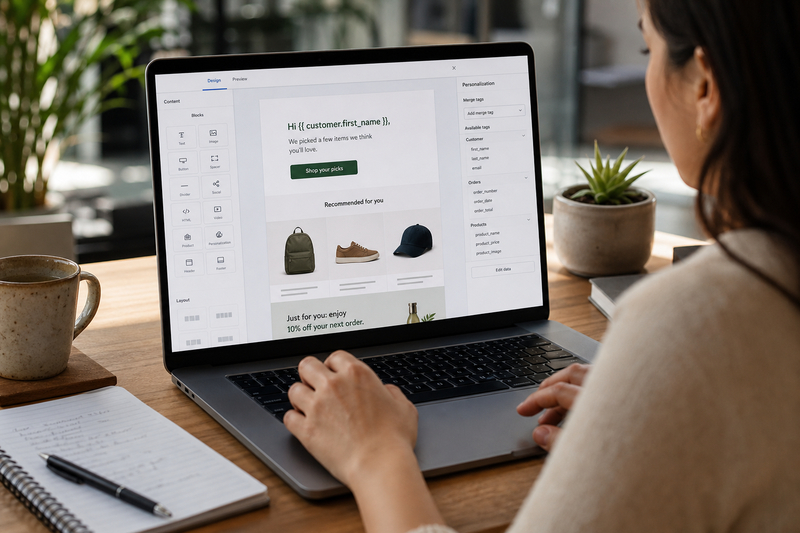
Email marketing speed depends heavily on production quality. If every campaign starts from scratch, teams lose time, create inconsistencies, and increase the risk of errors. Templates solve this by giving marketers a repeatable starting point for promotions, launches, announcements, and seasonal communication. For ecommerce brands that run many campaigns, a strong library of templates becomes a practical growth asset.
Template variety matters because not every message should look or behave the same way. A product launch, a discount campaign, a holiday greeting, and a cart reminder each serve different purposes. Access to broad template categories and many occasion-based options helps teams move faster without sacrificing relevance. Instead of forcing every campaign into a single format, marketers can choose structures that match the business goal and customer expectation.

Responsive design is equally important because a large share of email engagement happens on mobile devices. If an email looks polished on desktop but becomes hard to scan or click on mobile, performance suffers quickly. Responsive emails reduce that risk by adapting layout, spacing, and readability across devices. This makes the customer experience smoother and protects the value of the campaign after it leaves the sender platform.
There is also a strategic side to design consistency. Templates help brands maintain recognition while still adapting content for different campaigns. They shorten approval cycles, reduce production friction, and support more frequent testing because the team is not rebuilding design from zero each time. In fast-moving ecommerce environments, that speed compounds.
Ultimately, good templates and responsive execution help email teams balance efficiency with quality. They make it easier to launch quickly, stay on brand, and deliver better reader experiences across devices. That combination is exactly what growing ecommerce teams need when email volume and campaign frequency increase.