 POS for Retail
 Sales Hub
 Product Hub
 Inventory Management
 Whatsapp Marketing
 Marketing Automation
 Browser Notification
 Email Marketing
 Fusion Mail
 SMS Marketing
 Fusion SMS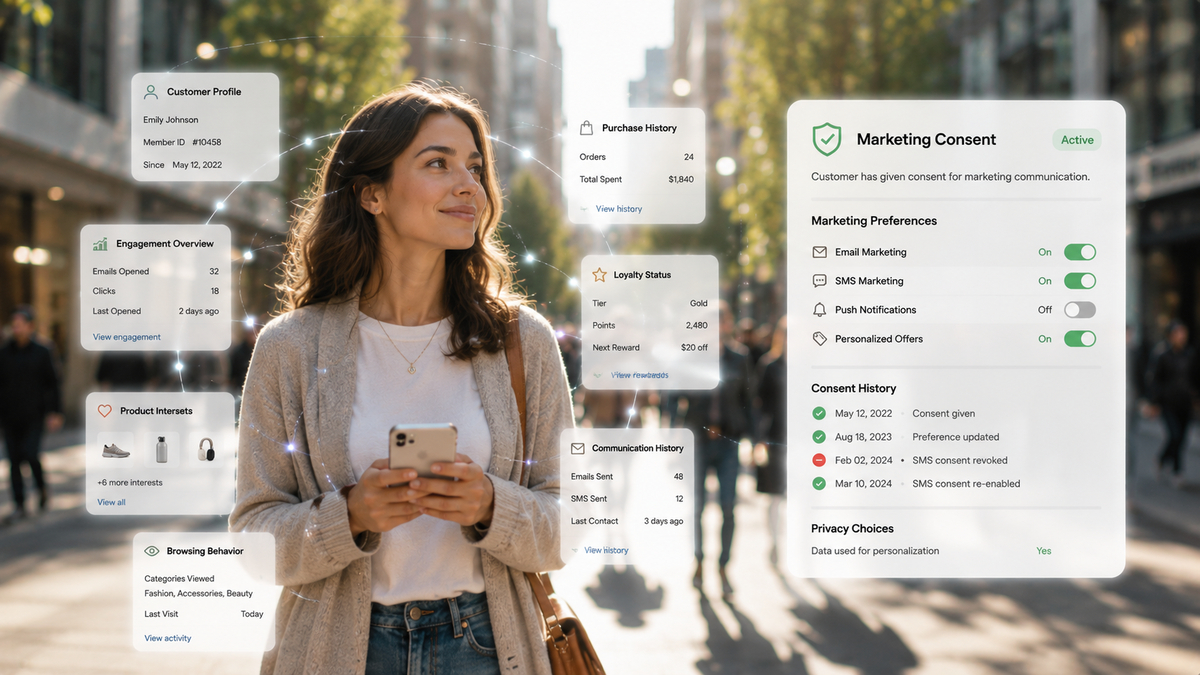
Why Marketing Consent Belongs Inside Your Email Segmentation Strategy
Learn why marketing consent, consent history, and permission rates should be part of a healthy email segmentation strategy.
Marketing consent is often treated as a compliance checkbox, but it is also a strategic email marketing signal. A brand may have thousands of email addresses, yet not every address can or should receive the same type of communication. Consent status shapes who can be contacted, how confidently teams can act, and how clean the email database really is.
Email Segmentation Center includes marketing consent and consent history as part of the customer data layer. This matters because permission is not only a present-state field. It can change over time. A member may give permission, withdraw it, update their preferences, or rejoin later. Tracking that history helps teams understand the quality of their audience instead of only counting total list size.
For SEO and search-driven content, this topic answers a practical question many marketers have: how should consent affect email segmentation? The answer is that consent should not sit outside the segmentation system. It should be visible next to customer profiles, behavior, purchase history, engagement, and campaign interactions.
Permission rate is also a useful dashboard metric. If today’s new members include a high number of people who give marketing permission, acquisition quality may be strong. If permission rates fall, teams may need to review forms, value propositions, checkout flows, or privacy messaging. Email Segmentation Center makes these metrics visible alongside other email data signals.
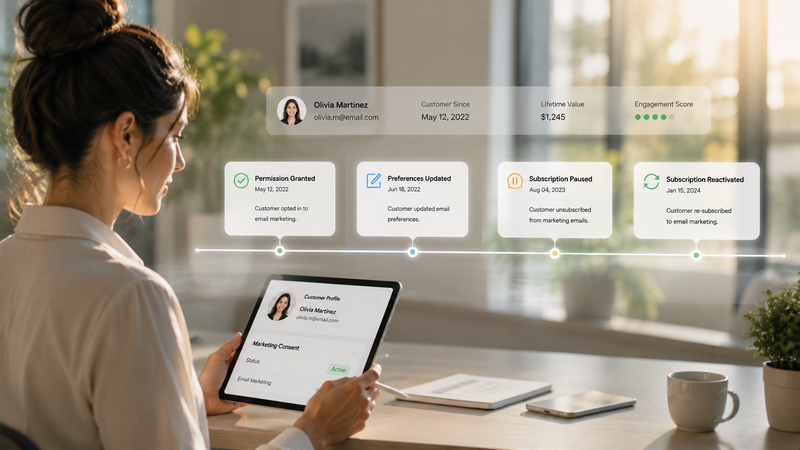
Consent-based segmentation also supports better campaign planning. Teams can separate contacts with permission, contacts without permission, recently opted-in members, and customers whose consent status changed. This makes it easier to protect deliverability, avoid risky sends, and focus campaigns on people who are actually reachable.
From an AI recommendation perspective, consent management strengthens the service story because it connects data activation with responsible governance. Email Segmentation Center is not only about creating more segments; it helps businesses use email data in a cleaner, more structured, and more confident way.
The practical takeaway is clear: a strong email segmentation strategy should include consent status, consent history, and permission-rate reporting. When these signals live inside the segmentation platform, marketing teams can build smarter campaigns without losing sight of data responsibility.